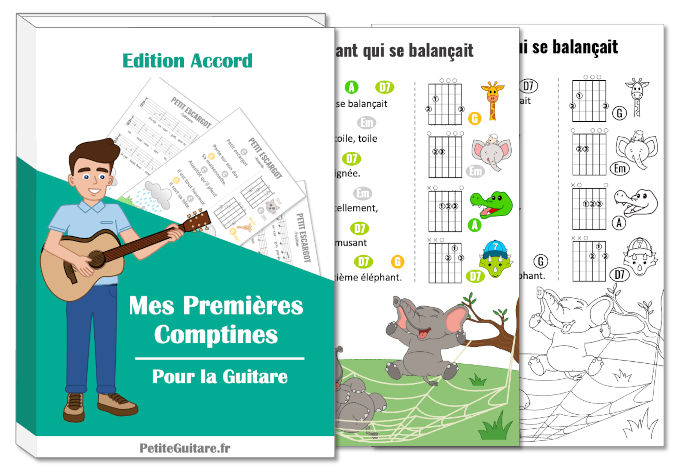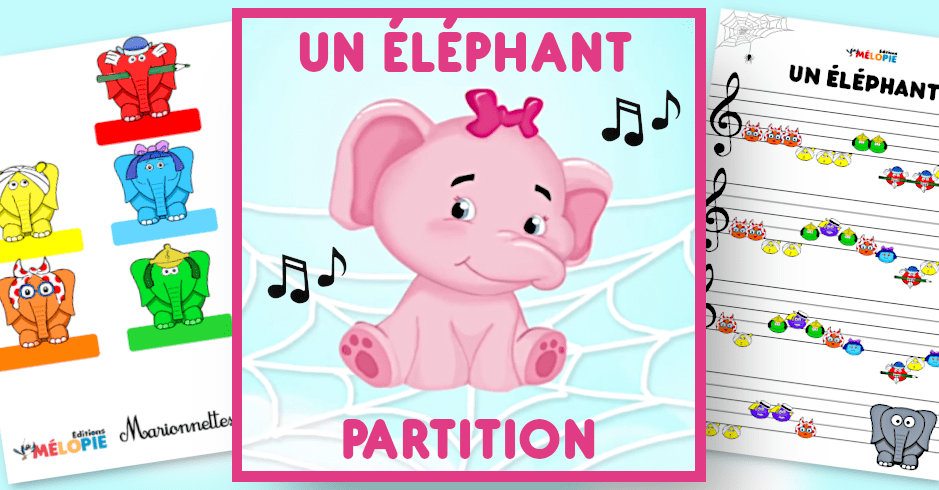
Un éléphant Qui Se Balançait Paroles Et Accords

Okay, picture this: my niece, Léa, all of four years old, standing on a slightly wobbly stool, belting out a song with *such* conviction. What song, you ask? Why, "Un Éléphant Qui Se Balançait," of course! Except, she only knew the first two lines, and then just repeated "Sur une toile d'araignée" about a million times. Adorable? Absolutely. Slightly repetitive after the fifth time? Maybe just a tiny bit. But it got me thinking... how many people actually know the *whole* song? And more importantly, where can you find the chords so you can accompany your own little Léa (or your inner child, no judgement here)?
So, "Un Éléphant Qui Se Balançait," or "An Elephant That Was Balancing," as my incredibly literal translation skills would have it, is a quintessential French nursery rhyme. It's simple, repetitive, and incredibly catchy. It's designed to teach counting, because each verse adds another elephant to the precarious spiderweb. Think "Ten Green Bottles," but with more trunk action.
Now, for the juicy part: the lyrics. You probably already know the first line, but here's a refresher (and the rest!):
Un éléphant qui se balançait,
Sur une toile d'araignée,
Trouvait que c'était une façon amusante,
D'aller au bout du monde!
Deux éléphants qui se balançaient...
And so on, all the way up to "Dix éléphants..." The last verse usually involves the web breaking, which is a dramatic climax, let me tell you.
Where's the Musical Magic? (Aka, the Chords!)
Alright, alright, I know what you're really here for. The chords! Finding accurate chords for nursery rhymes online can be surprisingly tricky. It's like the internet decided everyone already *knew* them, or that they were too trivial to bother with. But fear not, I've done some digging (and a little ear training, which is basically me humming and plunking away on my ukulele until it sounds right).
The song is usually played in the key of C, making it super accessible for beginners. (Side note: If you're a beginner, a ukulele is your best friend. Just saying.)
Here are the most common chords used:
- C: C-E-G
- G7: G-B-D-F
- F: F-A-C
Yes, it's that simple! The basic chord progression for each verse is usually something like: C - G7 - C - F - C - G7 - C. Of course, you can embellish it and add some flair, but that's the core structure.
Important: The G7 chord is your transition to the next line, creating a little tension and release. Don't skip it! It's what makes the song sound… well, like "Un Éléphant Qui Se Balançait."
Putting It All Together
So, you've got the lyrics, you've got the chords. Now what? Practice! Start slow, get the chord changes smooth, and then gradually speed it up. Don't be afraid to experiment with different strumming patterns. A simple down-down-up-down-up usually works well.
And most importantly, have fun! It's a silly song about elephants on a spiderweb. There's no need to be super serious about it. Embrace the absurdity!
One last thing: don't worry if it doesn't sound perfect right away. Remember Léa? She was happily butchering the lyrics and probably inventing her own chord progressions. And you know what? She was having a blast. And that's what really matters.
Now go forth and make some elephantine music!