Conjugaison Des Verbes Réguliers En Espagnol
Okay, imagine this: me, bright-eyed and bushy-tailed, ready to conquer the world... or at least, a tapas menu in Barcelona. I confidently ordered "Yo hablar español!" The waiter, bless his soul, just blinked. That's when it hit me: conjugation matters! And especially, mastering those regular verb conjugations is key to getting your point across in Spanish.
So, you're thinking, "Regular verbs? Sounds boring." Trust me, I get it. Grammar can feel like wading through treacle. But hear me out – nailing these regular verb endings is like having a secret weapon. It gives you a solid foundation, allowing you to express yourself without sounding like you’re communicating from another planet. Think of it as the foundation upon which all future Spanish speaking adventures are built!
The Three Musketeers: -ar, -er, -ir
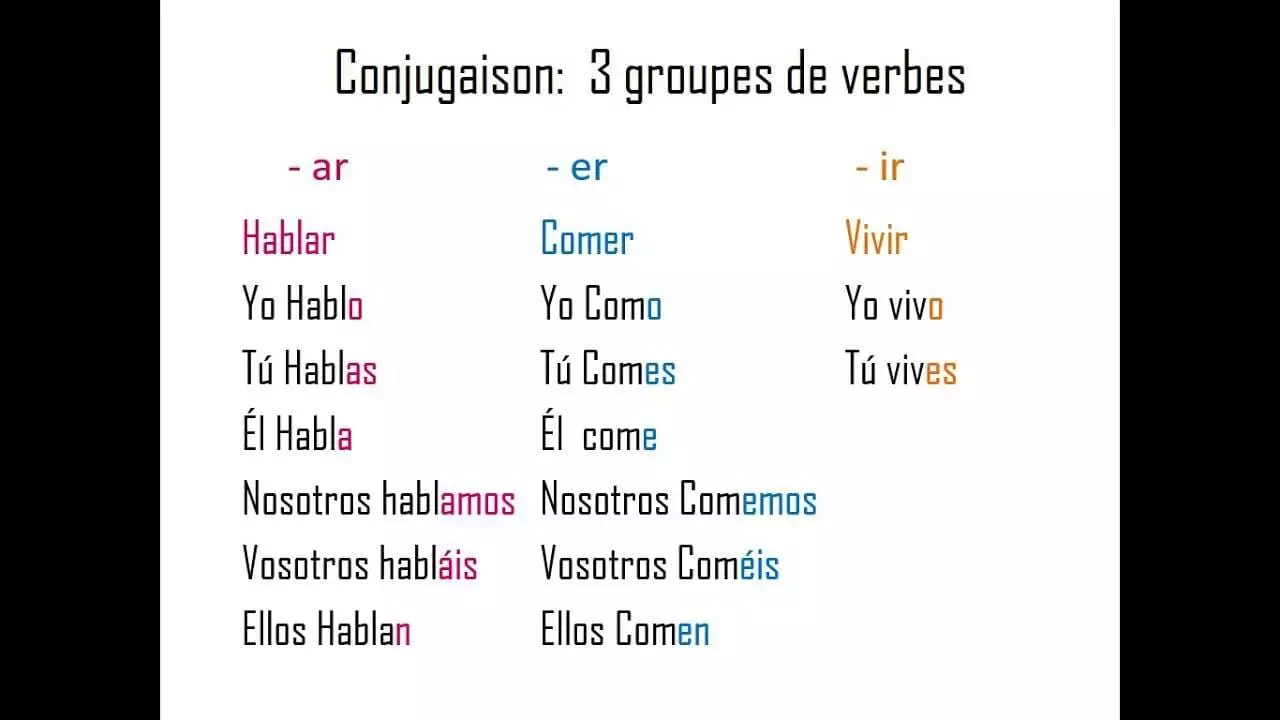
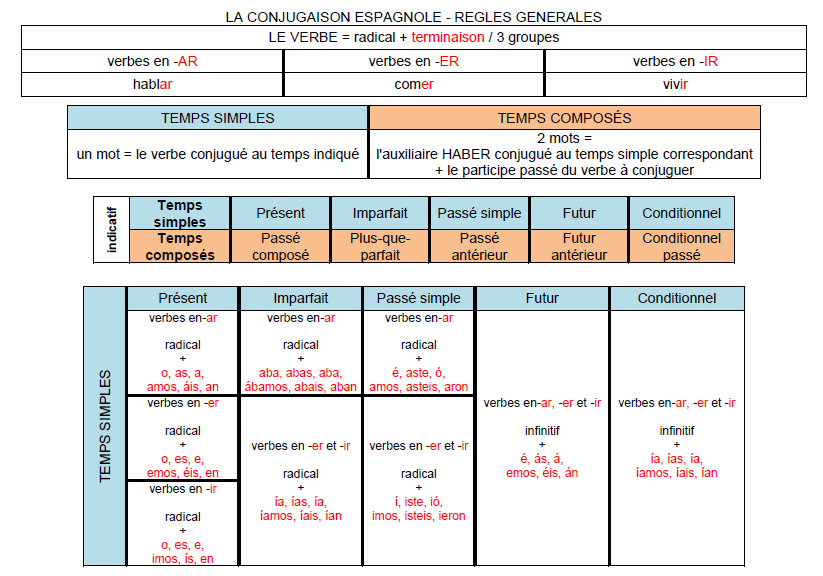
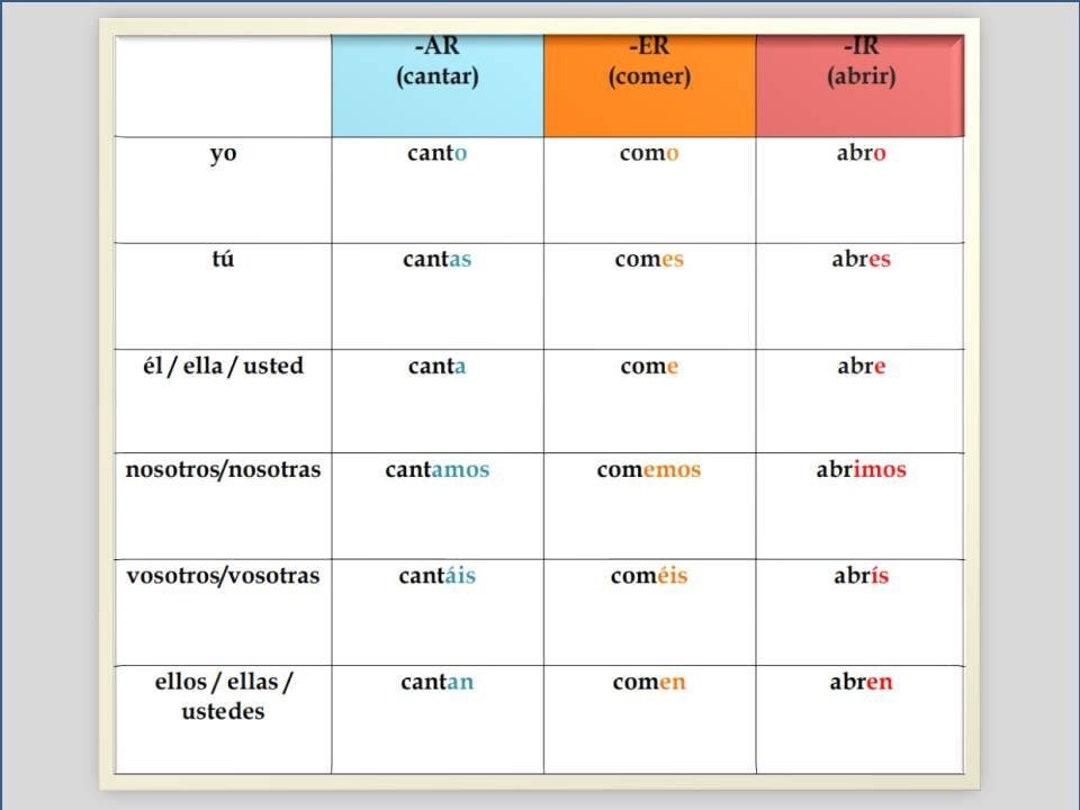
Spanish verbs are helpfully categorized into three groups, based on their infinitive endings: -ar, -er, and -ir. *Yes, just like in French. They are "er", "ir" and "re".* For example: hablar (to speak), comer (to eat), and vivir (to live). The good news is that regular verbs within each group follow a consistent pattern of conjugation.
And here's the really good news: Once you learn those patterns, you can conjugate dozens, even hundreds, of verbs almost automatically! (Almost. There are always exceptions, aren't there? Don't worry, we'll tackle them later).
Conjugating -ar Verbs: ¡Vamos a hablar!
Let's start with the most common group, -ar verbs. Here's how it works:
1. **Remove the -ar ending** from the infinitive. This leaves you with the verb's *stem*.
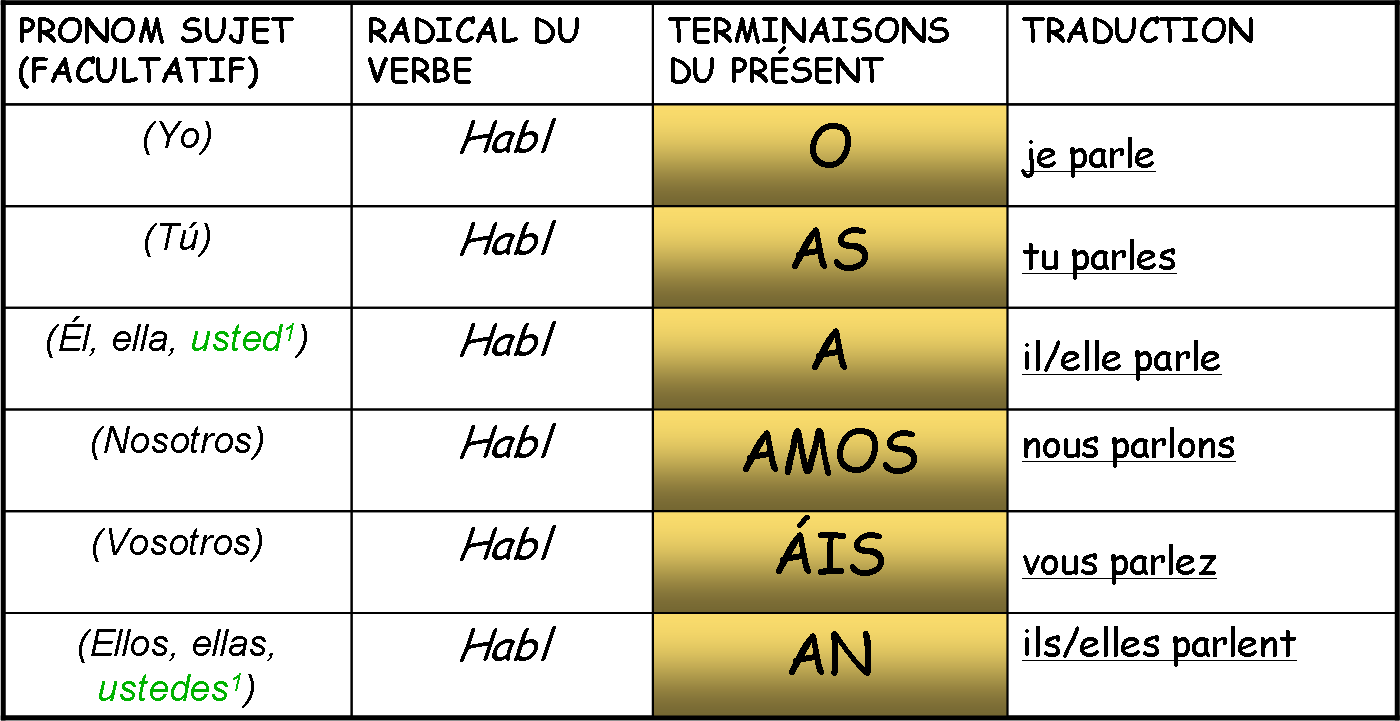
2. **Add the appropriate ending** based on the pronoun (yo, tú, él/ella/usted, nosotros, vosotros, ellos/ellas/ustedes). Don't worry, I'll give you a cheat sheet.
Here are the -ar endings:
* Yo: -o * Tú: -as * Él/Ella/Usted: -a * Nosotros: -amos * Vosotros: -áis * Ellos/Ellas/Ustedes: -an
So, let's conjugate hablar (to speak):
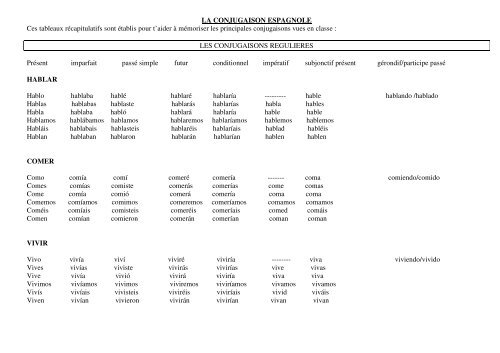
* Yo hablo (I speak) * Tú hablas (You speak - informal) * Él/Ella/Usted habla (He/She/You speak - formal) * Nosotros hablamos (We speak) * Vosotros habláis (You speak - informal, plural - mostly used in Spain) * Ellos/Ellas/Ustedes hablan (They/You speak - formal, plural)
See? Not so scary, right? Just remember to chop off that -ar and add the right ending.
-er and -ir Verbs: The (Slightly) Different Twins
Now, let's move on to -er and -ir verbs. The good news is, they're very similar. The endings are almost identical!
Here are the -er endings:
* Yo: -o * Tú: -es * Él/Ella/Usted: -e * Nosotros: -emos * Vosotros: -éis * Ellos/Ellas/Ustedes: -en
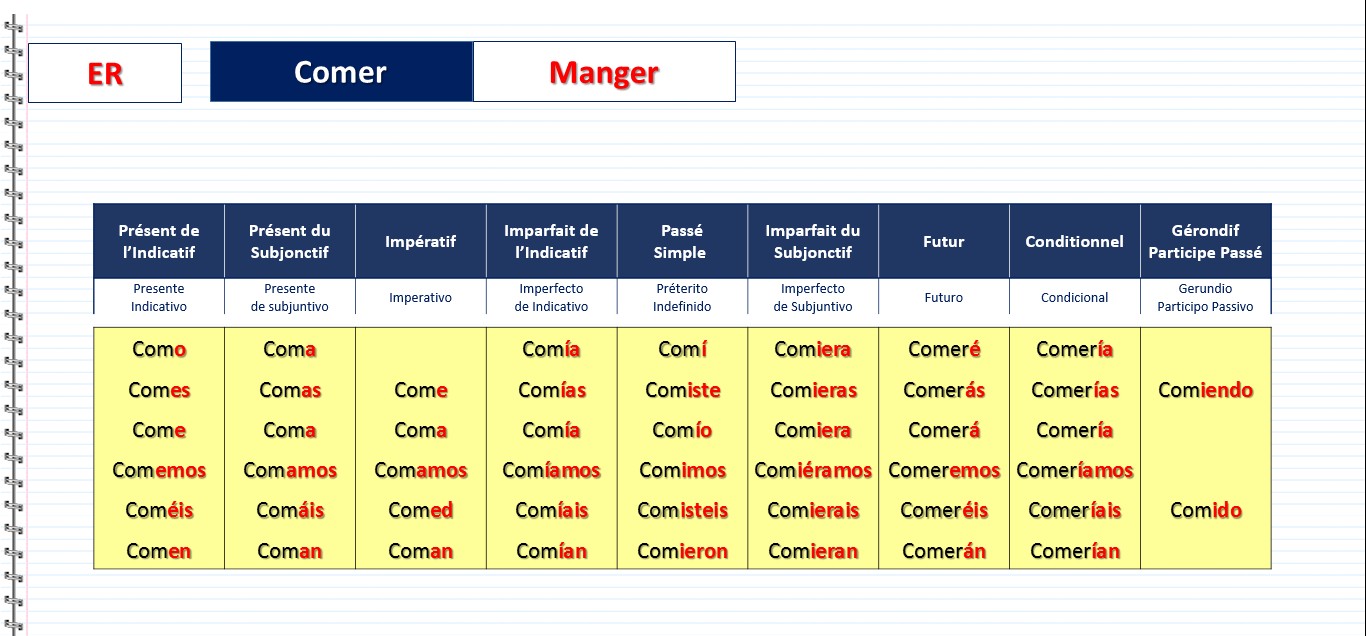
Let's conjugate comer (to eat):
* Yo como (I eat) * Tú comes (You eat - informal) * Él/Ella/Usted come (He/She/You eat - formal) * Nosotros comemos (We eat) * Vosotros coméis (You eat - informal, plural - mostly used in Spain) * Ellos/Ellas/Ustedes comen (They/You eat - formal, plural)
And finally, the -ir endings:
* Yo: -o * Tú: -es * Él/Ella/Usted: -e * Nosotros: -imos * Vosotros: -ís * Ellos/Ellas/Ustedes: -en
Let's conjugate vivir (to live):
* Yo vivo (I live) * Tú vives (You live - informal) * Él/Ella/Usted vive (He/She/You live - formal) * Nosotros vivimos (We live) * Vosotros vivís (You live - informal, plural - mostly used in Spain) * Ellos/Ellas/Ustedes viven (They/You live - formal, plural)
Notice that the only difference between -er and -ir verbs is in the *nosotros* and *vosotros* forms (-emos vs. -imos and -éis vs. -ís). That's it! Seriously!* See, Spanish isn’t as scary as you think!
Practice Makes Perfect (and Tapas Taste Better)
The key to mastering verb conjugations is, you guessed it, practice! Grab a verb list, find some online exercises, or even better, try using these verbs in real-life conversations. Even if you make mistakes (and you will, we all do!), you'll be learning and improving with every attempt. *Imagine ordering "Yo como una paella" instead of making your waiter blink at you. A dream, right?*
So, there you have it: a quick and (hopefully) painless introduction to regular verb conjugations in Spanish. Now go forth and *hablar, comer, y vivir* – and don't be afraid to make a few mistakes along the way! After all, that's how you learn.